| Title | Hydraulic Linear Damper Vs Gas Spring (Expert Tips) |
|---|---|
| Image View | 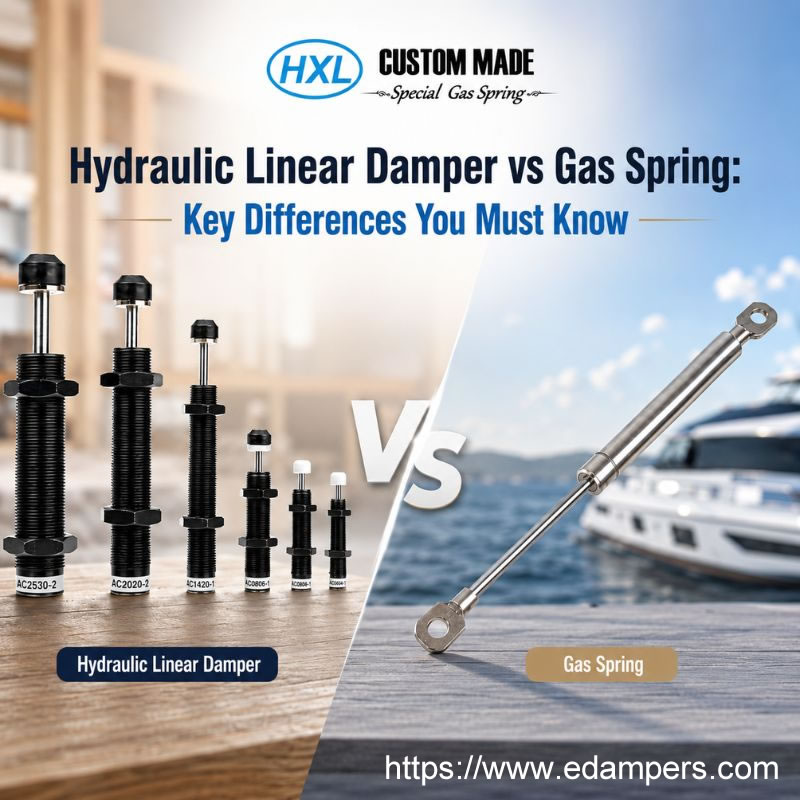 |
| Blog Details |
Hydraulic Linear Damper vs Gas Spring: Key Differences You Must KnowWhen both options are sitting on your spec sheet and your engineering team is split, how do you decide? The hydraulic linear damper vs gas spring debate comes up more often than you'd think, and the wrong call affects noise levels, component lifespan, and end-user experience across the board. If you're already sourcing motion control components, understanding where each solution genuinely fits is what separates a good design decision from a costly one. Let's walk through this properly so you're not second-guessing yourself mid-project. Two Devices, Two Completely Different JobsThese two components don't compete with each other. They solve different problems, and confusing one for the other is where most sourcing mistakes happen. However, despite similarities in appearance, the internal construction and intended use of these devices cannot be more opposite. A gas spring is a device that relies on compressed nitrogen gas for creating pushing or lifting force. It keeps items raised. On the other hand, a hydraulic linear damper is a device that creates resistance to movement by forcing viscous oil through a valve. It controls the lowering and closing of components. The gas spring is energy-storing. The damper is energy-absorbing. That's the fundamental split. Neither replaces the other. In some designs, both are used together, and a gas spring damper hybrid unit combines both functions in a single component. Misapplying either one doesn't just affect performance, it accelerates wear on surrounding parts like hinges, frames, and mounting points. What Makes Gas Springs the Right Call for Lifting and SupportIndustrial gas springs are built around one core strength: generating consistent outward force without any external power source. That self-contained energy makes them uniquely practical for applications where you need something to stay up, stay open, or assist a user in lifting a load repeatedly over time. Many OEMs partner directly with a gas spring manufacturer during the early design phase to optimize force ratings, mounting geometry, and long-term performance.
Where the Hydraulic Linear Damper Takes OverThe hydraulic damping system doesn't generate any force at all. It converts kinetic energy into heat through fluid friction, and that's exactly what you need when the goal is controlled, quiet deceleration rather than active support. This is where people sometimes underestimate the hydraulic linear damper, treating it as a secondary component, when in many assemblies it's the one doing the most important work.
Reading the Right Signals in Your ApplicationMost of the time, your application tells you exactly which one it needs. You just have to know what to look for, and asking the right questions during the design phase saves a lot of back-and-forth later. Many engineers don't realize they need a damper until they're already dealing with noise complaints or premature hinge failure in the field. In most industrial motion control solutions, the hydraulic linear damper vs gas spring decision depends entirely on whether the application needs force assistance or controlled deceleration.
Linear Damper vs Gas Strut: Side-by-Side Breakdown |
| More Details |
This is part1 of 3. For the complete technical guide including parameter tables and case studies, visit:https://www.edampers.com/hydraulic-linear-damper-vs-gas-spring.html |
| Update Time | 2026-06-12 09:46:29 |
| ID | 108 |
| Create User | 500052 |